Introduction: Making Your Event Comfortable for All
Planning a wedding or special event involves countless details, from choosing the perfect venue to crafting a delicious menu. But have you considered the comfort and accessibility of all your guests? It's easy to overlook the needs of elderly guests, who may require specific seating arrangements to fully enjoy the celebration.
Key Takeaways
- Prioritize comfortable seating for elderly guests.
- Strategic table placement is crucial for accessibility.
- Minimize noise and distractions for sensitive guests.
- Adequate lighting enhances safety and comfort.
- Gather information about guests' specific needs.
Ensuring their comfort isn't just polite; it's a key ingredient for creating a truly inclusive and memorable event. After all, you want everyone to feel welcome and able to participate fully. This guide provides a comprehensive look at elderly guest seating considerations, offering practical tips and strategies to make your event enjoyable for everyone.
What will you learn? We'll cover everything from choosing the right type of seating to strategically placing tables for easy access. We'll also explore common mistakes to avoid and offer expert advice to help you create a seating plan that prioritizes comfort and accessibility. Ready to make your event a success for all your guests?
Understanding the Needs of Elderly Guests at Events
Before diving into the specifics of seating arrangements, it's crucial to understand the unique needs and challenges that elderly guests might face. These can range from mobility issues and visual impairments to hearing difficulties and general fatigue. Addressing these needs proactively will go a long way in ensuring their comfort and enjoyment.
Mobility is often a primary concern. Many elderly individuals may have difficulty walking long distances, navigating stairs, or getting in and out of chairs. Arthritis or other joint pain can also make sitting in uncomfortable positions for extended periods difficult. Therefore, minimizing walking distances and providing supportive seating are essential.
Visual and hearing impairments are also common among older adults. Poor lighting can make it difficult to navigate the venue, while loud music or background noise can make conversations challenging. Consider providing well-lit pathways, large-print menus, and quieter seating areas where guests can easily converse. Think about these factors when planning your table arrangement.
Finally, fatigue can be a significant factor. Even with the best intentions, a long day of socializing and celebrating can be tiring for elderly guests. Providing comfortable resting areas and allowing for frequent breaks can help them stay energized and engaged throughout the event.
Choosing the Right Type of Seating for Comfort and Support
Selecting the right type of seating is paramount when considering the comfort of elderly guests. Not all chairs are created equal, and some styles are far more conducive to comfort and accessibility than others. Pay close attention to factors like seat height, back support, and armrests.
What features should you look for? Opt for chairs with a seat height that allows guests to sit with their feet flat on the floor. This provides proper support and reduces strain on the knees and hips. Avoid low-slung chairs or those with deep seats, as these can be difficult to get in and out of. Chairs with good back support are also essential, especially for guests with back pain. Look for chairs with a slightly curved back that provides lumbar support.
Armrests are another crucial consideration. They provide support for getting in and out of the chair and offer a comfortable place to rest arms during the event. Choose chairs with sturdy armrests that are positioned at a comfortable height. Avoid chairs with flimsy or wobbly armrests, as these can be unsafe and uncomfortable.
Here's a quick checklist:
- Seat Height: Ensure guests' feet can rest flat on the floor.
- Back Support: Look for chairs with lumbar support.
- Armrests: Choose sturdy armrests at a comfortable height.
- Cushioning: Adequate cushioning is essential for comfort.
- Stability: Ensure chairs are stable and won't easily tip over.
Consider using padded chairs to provide extra comfort. Thin, hard chairs can become uncomfortable after sitting for a long time. And remember to opt for chairs that feel sturdy and stable. Wobbling chairs are a safety hazard. When using SeatingChartCreator.com to plan your seating, keep chair types in mind, and note any specific accommodations needed for each guest so you can communicate these easily to the venue.
Design Your Perfect Seating Chart
Free drag-and-drop seating chart creator for weddings, events, and venues. Export professional PDFs in minutes.
Create Free Seating ChartStrategic Table Placement: Accessibility is Key
Beyond the type of seating, the placement of tables plays a crucial role in ensuring accessibility for elderly guests. Strategic table placement can minimize walking distances, reduce congestion, and provide easy access to essential amenities.
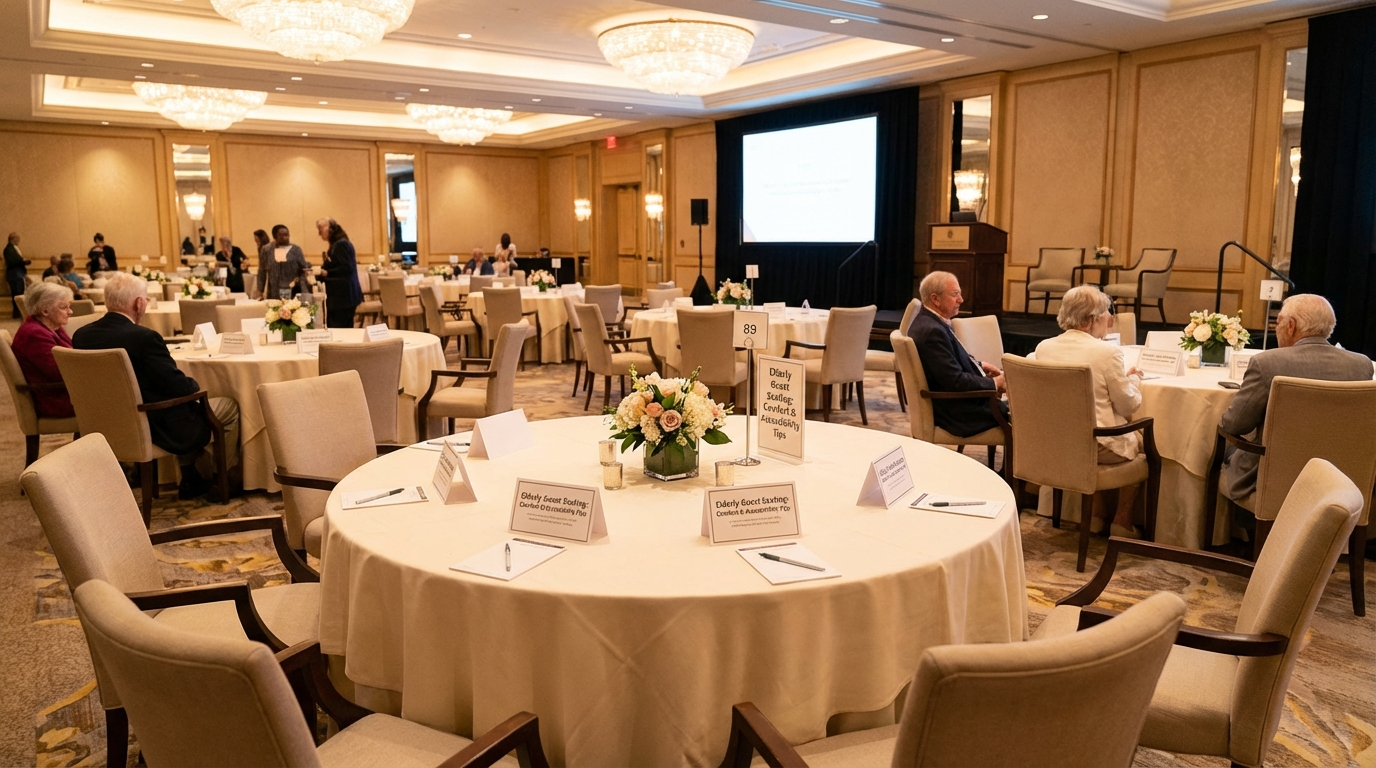
Where should you position tables? Prioritize placing tables for elderly guests near entrances, exits, restrooms, and other key areas. This minimizes the distance they need to walk and reduces the likelihood of them getting lost or disoriented. Avoid placing tables in crowded or high-traffic areas, as this can make it difficult for them to navigate and increase the risk of falls.
Consider the table shape and size. Round tables are generally more conducive to conversation and allow for easier interaction among guests. Avoid tables that are too large or wide, as these can make it difficult for elderly guests to reach across and participate in conversations. Ensure there is ample space between tables to allow for easy movement and wheelchair access. A general rule of thumb is to allow at least 36 inches between tables.
Creating a Seating Chart with Elderly Guest Needs in Mind: A Step-by-Step Guide
Creating a seating chart that prioritizes the needs of elderly guests doesn't have to be a daunting task. By following a few simple steps, you can create a plan that ensures their comfort and enjoyment. Let's look at a step-by-step process.
Gather Information
Before you start, gather information about any specific needs or preferences your elderly guests may have. Do they have mobility issues, visual or hearing impairments, or other health concerns? Ask them directly or consult with family members to get a clear understanding of their requirements.
Prioritize Placement
Use SeatingChartCreator.com to begin mapping out your seating arrangement. Prioritize placing elderly guests at tables that are easily accessible to entrances, exits, restrooms, and other key areas. Place them near people they know and feel comfortable with to ease conversation.
Consider Table Dynamics
Think about the dynamics of each table. Are there guests who are particularly outgoing or engaging? Placing elderly guests near these individuals can help stimulate conversation and create a more enjoyable experience.
Visual Representation
Utilize SeatingChartCreator.com's visual interface to clearly represent the seating arrangement. This will help you identify potential issues and make adjustments as needed. Consider using different colors or symbols to indicate guests with special needs.
Seek Feedback
Once you've created a draft of the seating chart, share it with family members or friends for feedback. They may be able to offer valuable insights or identify potential issues that you may have overlooked.
Finalize and Communicate
Once you're satisfied with the seating chart, finalize it and communicate the arrangements to your guests. Consider providing a printed seating plan at the entrance to the event to help guests find their tables easily.
By following these steps, you can create a seating chart that not only accommodates the needs of elderly guests but also enhances their overall experience.
Tips for Minimizing Noise and Distractions
Loud noise and excessive distractions can be particularly challenging for elderly guests, who may be more sensitive to these stimuli. Taking steps to minimize noise and create a calmer environment can significantly enhance their comfort and enjoyment.
Consider the placement of speakers and entertainment. Avoid placing tables for elderly guests directly in front of speakers or near loud entertainment areas. This will help to reduce the amount of noise they are exposed to and make it easier for them to converse with other guests. If possible, designate a quieter area where guests can retreat if they need a break from the noise.
Control the volume of the music. Work with your DJ or band to ensure that the music is played at a reasonable volume. Consider playing softer background music during dinner and reserving the louder music for dancing later in the evening. You may consider providing hearing assistance devices if you expect a large number of guests with hearing difficulties.
Here are more ideas to consider:
- Sound Dampening: Use sound-dampening materials, such as carpets, curtains, and tablecloths, to absorb sound and reduce echo.
- Strategic Breaks: Schedule regular breaks in the entertainment to allow guests to rest and recharge.
- Clear Signage: Provide clear signage to direct guests to quieter areas or restrooms.
- Personal Attention: Check in with elderly guests periodically to ensure they are comfortable and have everything they need.
Lighting Considerations for Visually Impaired Guests
Adequate lighting is crucial for the safety and comfort of all guests, but it's especially important for those with visual impairments. Poor lighting can make it difficult to navigate the venue, identify faces, and read menus. By paying attention to lighting considerations, you can create a more welcoming and accessible environment for elderly guests.
What kind of lighting should you use? Ensure that the venue is well-lit, particularly in areas such as entrances, exits, restrooms, and walkways. Avoid using harsh or glaring lights, as these can be uncomfortable and disorienting. Instead, opt for softer, diffused lighting that provides adequate illumination without creating excessive glare. Consider using adjustable lighting to allow guests to customize the level of illumination to their preferences.
Provide task lighting at tables. This can make it easier for elderly guests to read menus, see their food, and engage in conversation. Small table lamps or clip-on lights can be effective options. Ensure that pathways are well-lit and free of obstacles. This will help to prevent falls and make it easier for guests to navigate the venue safely. Consider using contrasting colors to highlight steps, ramps, and other potential hazards.
Example Seating Chart Templates for Events with Elderly Guests
To illustrate how these principles can be applied in practice, here are a couple of example seating chart templates for events with elderly guests. These templates can be customized to fit the specific needs of your event and venue.
Template 1: Small Wedding Reception
In a small wedding reception with approximately 50 guests, prioritize placing elderly guests at tables closest to the dance floor and restrooms. Use round tables to facilitate conversation and ensure ample space between tables for easy movement. Designate a quiet area near the reception area where guests can retreat if they need a break from the noise.
Template 2: Corporate Gala
For a larger corporate gala with several hundred attendees, designate a specific section for elderly guests near the entrance and exit. Provide comfortable seating with good back support and armrests. Ensure that the lighting in this area is adequate and that noise levels are kept to a minimum. Consider providing large-print programs and menus for visually impaired guests.
These are just two examples, and the best seating chart for your event will depend on a variety of factors, including the size and layout of the venue, the number of guests, and the specific needs of your elderly guests. Use SeatingChartCreator.com to adapt these templates, or create your own custom layout!
Common Mistakes to Avoid When Seating Elderly Guests
Even with the best intentions, it's easy to make mistakes when planning seating arrangements for elderly guests. Here are some common pitfalls to avoid:
- Ignoring Specific Needs: Failing to gather information about the specific needs of elderly guests can lead to seating arrangements that are uncomfortable or inaccessible.
- Placing Guests in High-Traffic Areas: Placing elderly guests in crowded or high-traffic areas can make it difficult for them to navigate and increase the risk of falls.
- Using Uncomfortable Seating: Using chairs that are too low, too hard, or lack adequate back support can be uncomfortable for elderly guests.
- Failing to Provide Adequate Lighting: Poor lighting can make it difficult for elderly guests to navigate the venue and read menus.
- Ignoring Noise Levels: Loud noise can be particularly challenging for elderly guests, who may be more sensitive to these stimuli.
- Not Seeking Feedback: Failing to seek feedback from family members or friends can lead to overlooking potential issues.
By avoiding these common mistakes, you can create a seating chart that truly prioritizes the comfort and accessibility of elderly guests.
Expert Tips and Pro Advice for Inclusive Seating
To further enhance your efforts in creating an inclusive seating arrangement, consider these expert tips and pro advice:
- Communicate with the Venue: Before finalizing your seating chart, communicate with the venue staff to ensure that they can accommodate your requests for accessible seating and other accommodations.
- Consider Assistive Devices: If any of your elderly guests use assistive devices, such as wheelchairs or walkers, ensure that there is ample space for them to maneuver around their tables.
- Offer Assistance: Offer assistance to elderly guests as they arrive at the event and help them find their tables.
- Check In Regularly: Check in with elderly guests periodically throughout the event to ensure that they are comfortable and have everything they need.
By implementing these expert tips, you can create an event that is truly inclusive and enjoyable for all.
Frequently Asked Questions
The ideal seat height for elderly guests is typically between 17 and 19 inches. This height allows most individuals to sit with their feet flat on the floor, providing proper support and reducing strain on the knees and hips. It's best to avoid very low or very high seating.
Get Event Planning Tips
Weekly tips on seating arrangements, event layouts, and planning strategies.
SeatingChart Team
Our team of event planning experts is dedicated to helping you create unforgettable events with perfect seating arrangements.
Ready to Create Your Seating Chart?
Start planning your perfect event layout with our free drag-and-drop seating chart creator. No sign-up required to try it out!
Try Free Seating Chart Creator