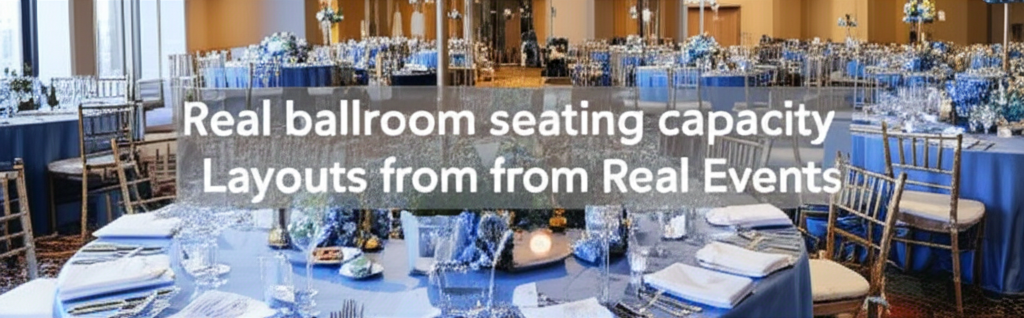
Planning an event in a ballroom? One of the most crucial aspects is determining the ballroom seating capacity and creating a comfortable and functional layout. Getting this right ensures your guests have a great experience and the event flows smoothly. But how do you accurately estimate the capacity and design a layout that maximizes space without feeling cramped? This guide will walk you through everything you need to know, from assessing your venue to using tools like SeatingChartCreator.com to visualize your seating plan. We'll explore real-world examples, proven strategies, and common pitfalls to avoid, so you can confidently create a ballroom seating arrangement that perfectly suits your event.
Design Your Perfect Seating Chart
Free drag-and-drop seating chart creator for weddings, events, and venues. Export professional PDFs in minutes.
Create Free Seating ChartKey Takeaways
- Accurately assess your venue's dimensions and any obstructions to determine usable space.
- Consider different table shapes (round, rectangular, oval) and their impact on seating capacity and guest interaction.
- Utilize online seating chart tools like SeatingChartCreator.com to visualize your layout and experiment with different arrangements.
- Factor in essential elements like dance floors, stages, buffet tables, and walkways when planning your seating arrangement.
- Prioritize guest comfort by providing ample space between tables and chairs, ensuring easy movement and accessibility.
Understanding Ballroom Seating Capacity
The term "ballroom seating capacity" refers to the maximum number of guests that can be comfortably seated in a ballroom for a specific event. This isn't just about fitting as many chairs as possible; it's about creating a space that allows for comfortable movement, dining, and interaction. Many factors contribute to determining the true seating capacity, and it's more than just the square footage of the room. Ignoring these factors can lead to overcrowding and a negative experience for your guests.
Accurately calculating your ballroom's seating capacity is the first step to a successful event. Overestimating can lead to a sparsely populated room that lacks energy, while underestimating leads to cramped conditions and unhappy guests. It's a balancing act that requires careful consideration of the space and the event's specific needs.
Think about it: a wedding reception with a dance floor and buffet requires more space per person than a conference with rows of chairs. The key is to tailor the seating arrangement to the function and ensure everyone feels comfortable and has enough room to enjoy the event.
Factors Influencing Seating Capacity
Several elements influence the actual seating capacity of a ballroom. Taking these into account is crucial for creating a realistic and functional seating plan.
- Ballroom Dimensions: The square footage of the room is the starting point, but remember to account for any pillars, alcoves, or oddly shaped areas that reduce usable space.
- Table Shape and Size: Round tables generally seat 8-10 people comfortably, while rectangular tables can seat more along their length but may limit interaction. The diameter of round tables and the length/width of rectangular tables directly impact how many can fit in the room.
- Event Type: A wedding reception usually requires more space per person than a corporate seminar. Consider whether you need space for a dance floor, buffet lines, a stage, or presentation areas.
- Aisles and Walkways: Guests need to be able to move freely between tables and access restrooms, exits, and other amenities. Adequate aisle space is essential for both comfort and safety.
- Stage and Dance Floor: The size and placement of a stage or dance floor will significantly impact the available space for tables.
- Buffet and Bar Areas: If you're serving food buffet-style or having a bar, you'll need to allocate sufficient space for these areas to avoid bottlenecks and congestion.
- Accessibility Requirements: Compliance with ADA guidelines is crucial. Ensure enough space for wheelchair access at tables and in aisles.
Ignoring even one of these factors can throw off your entire seating plan. It's better to be conservative and prioritize guest comfort over squeezing in a few extra tables.
How to Calculate Realistic Seating Capacity
Now that you understand the contributing factors, let's dive into how to calculate a more accurate ballroom seating capacity for your event.
Measure the Ballroom
Obtain accurate measurements of the ballroom's length and width. Note any permanent fixtures, such as pillars or built-in bars, which will reduce the usable space.
Determine Table Size and Shape
Decide on the table shape (round, rectangular, oval) and size (e.g., 60-inch round, 6-foot rectangular). Research the recommended seating capacity for your chosen table size and shape. A 60-inch round table typically seats 8 people comfortably.
Allocate Space for Other Elements
Estimate the space required for the dance floor, stage, buffet tables, bar area, and any other elements that will occupy the ballroom. Subtract this space from the total usable area.
Plan Aisles and Walkways
Factor in aisle widths. Main aisles should be at least 5 feet wide to allow for comfortable movement. Aisles between tables should be a minimum of 3 feet wide.
Calculate the Number of Tables
Using the remaining usable space, calculate how many tables of your chosen size and shape can fit comfortably while maintaining adequate aisle space.
Determine Total Seating Capacity
Multiply the number of tables by the seating capacity per table to arrive at the estimated total seating capacity for the ballroom.
For example, let's say you have a ballroom that is 50 feet by 80 feet (4000 sq ft). After deducting space for the dance floor, stage, and buffet, you have 3000 sq ft remaining. You've decided to use 60-inch round tables that seat 8 people each. Allowing for 3-foot aisles between tables, you can fit approximately 30 tables in the space. This gives you a total seating capacity of 240 guests.
Optimizing Your Seating Layout with SeatingChartCreator.com
Calculating the numbers is just the beginning. Visualizing your seating arrangement is crucial to ensure everything fits and flows smoothly. That's where tools like SeatingChartCreator.com come in handy. Using a seating chart creator allows you to experiment with different layouts, table sizes, and arrangements without physically moving furniture.
SeatingChartCreator.com offers a free and intuitive platform for designing your ballroom seating chart. You can input the dimensions of your venue, add tables of various shapes and sizes, and arrange them according to your preferences. The drag-and-drop interface makes it easy to move elements around and see how different arrangements impact the overall space.
Here's how to use SeatingChartCreator.com to optimize your ballroom seating layout:
Input Venue Dimensions
Start by entering the length and width of your ballroom into the platform. This will create a virtual representation of your space.
Add Tables
Select the table shape (round, rectangular, etc.) and size you plan to use. Add the appropriate number of tables to your virtual ballroom.
Arrange Tables
Drag and drop the tables into your desired arrangement. Ensure adequate aisle space between tables and around the perimeter of the room.
Add Other Elements
Incorporate the dance floor, stage, buffet tables, bar area, and any other elements into your seating chart. Adjust their size and placement to optimize the layout.
Visualize and Adjust
Take a step back and visualize the overall layout. Make adjustments as needed to improve flow, maximize space, and ensure guest comfort. Create Your Seating Chart today!
By using SeatingChartCreator.com, you can avoid costly mistakes and create a ballroom seating arrangement that is both functional and aesthetically pleasing.
Table Shape and Arrangement Strategies
The shape of your tables and how you arrange them significantly impact the ambiance and functionality of your ballroom. Here are some popular strategies to consider:
Round Tables
- Pros: Promote conversation, create a more intimate atmosphere, and offer better sightlines for guests.
- Cons: Require more space than rectangular tables, can limit seating capacity, and may not be ideal for events with a strong focus on presentations.
Rectangular Tables
- Pros: Maximize seating capacity, create a more formal and structured look, and are well-suited for events with presentations or performances.
- Cons: Can make conversation more difficult, may not be as visually appealing as round tables, and can create a less intimate atmosphere.
Consider mixing table shapes to create visual interest and accommodate different needs. For example, you could use round tables for guest seating and rectangular tables for the head table or buffet lines.
Arrangement strategies also play a vital role. Here are a few popular options:
- Herringbone: Tables are angled towards a central point, such as a stage or head table. This provides good sightlines for most guests.
- Serpentine: Tables are arranged in a winding pattern, creating a more dynamic and engaging space.
- Classroom Style: Rows of rectangular tables facing a stage or presentation area. Ideal for conferences and seminars.
- U-Shape: Tables are arranged in a U-shape, with the open end facing a presentation area. This promotes interaction and collaboration.
Essential Elements Beyond Tables and Chairs
A successful ballroom seating plan considers more than just tables and chairs. Integrating other essential elements creates a functional and enjoyable space for your guests.
- Dance Floor: The size and location of the dance floor are crucial, especially for weddings and parties. Ensure it's large enough to accommodate your guests and positioned in a way that doesn't obstruct sightlines or traffic flow.
- Stage: If you have a band, DJ, or speakers, a stage is a must. Consider the size of the stage and its impact on the overall seating capacity.
- Buffet Tables: For buffet-style meals, allocate ample space for buffet tables and ensure they are easily accessible to all guests. Consider setting up multiple buffet stations to avoid long lines.
- Bar Area: The bar should be strategically located to minimize congestion and provide easy access for guests. Consider having multiple bars if you have a large guest count.
- Audio-Visual Equipment: Plan for the placement of speakers, screens, projectors, and other AV equipment. Ensure they don't obstruct sightlines or create safety hazards.
- Lighting: Lighting plays a significant role in setting the mood and ambiance of the ballroom. Work with your venue to create a lighting plan that complements your seating arrangement.
Remember to factor in these elements when calculating your ballroom seating capacity and designing your layout. Neglecting them can lead to a cramped and uncomfortable space.
Before You Start
- Get final guest count confirmed
- Request venue floor plan dimensions
- Identify VIP guests and special needs
- Confirm dimensions of tables, dance floor, and stage
Prioritizing Guest Comfort and Accessibility
While maximizing ballroom seating capacity is important, it shouldn't come at the expense of guest comfort and accessibility. Prioritizing these elements ensures everyone enjoys the event.
Here are some tips for creating a comfortable and accessible seating arrangement:
- Ample Space Between Tables: Provide at least 3 feet of space between tables to allow guests to move freely without bumping into chairs or other guests.
- Comfortable Chairs: Invest in comfortable chairs that provide adequate back support. Consider padded chairs for longer events.
- Clear Aisles: Ensure aisles are wide enough for guests to navigate easily, including those with wheelchairs or mobility aids. Main aisles should be at least 5 feet wide.
- Accessible Seating: Provide designated seating areas for guests with disabilities, ensuring they have ample space to maneuver and access amenities.
- Consider Sightlines: Arrange tables so that guests have clear sightlines of the stage, dance floor, or presentation area.
- Temperature Control: Ensure the ballroom is adequately heated or cooled to maintain a comfortable temperature for all guests.
Remember, a comfortable and accessible environment will enhance the overall experience for your guests and contribute to the success of your event. Use Free Templates as a starting point.
Common Mistakes to Avoid in Ballroom Seating
Planning a ballroom seating arrangement can be challenging, and it's easy to make mistakes that can negatively impact the event. Here are some common pitfalls to avoid:
- Ignoring Ballroom Dimensions: Failing to accurately measure the ballroom and account for permanent fixtures can lead to a poorly planned layout.
- Overcrowding Tables: Squeezing too many guests around a table can make it difficult for them to eat, drink, and converse comfortably.
- Neglecting Aisle Space: Insufficient aisle space can create bottlenecks and make it difficult for guests to move around the ballroom.
- Poor Sightlines: Arranging tables in a way that obstructs sightlines of the stage or presentation area can frustrate guests.
- Forgetting Accessibility: Failing to provide accessible seating and adequate space for guests with disabilities is a major oversight.
- Ignoring Event Flow: Not considering how guests will move through the ballroom can lead to congestion and confusion.
By being aware of these common mistakes, you can avoid them and create a ballroom seating arrangement that is both functional and enjoyable for your guests. Use a tool such as SeatingChartCreator.com and try different seating arrangements.
Expert Tips for a Flawless Seating Plan
To elevate your ballroom seating plan from good to great, consider these expert tips:
- Create a Detailed Floor Plan: A detailed floor plan that includes all tables, chairs, stages, dance floors, and other elements is essential for effective planning.
- Use a Seating Chart Tool: Utilize online seating chart tools like SeatingChartCreator.com to visualize your layout and experiment with different arrangements.
- Consider Guest Relationships: When assigning seats, take into account guest relationships and try to seat people together who know each other or have common interests.
- Mix and Mingle: Strategically place guests who don't know each other at the same table to encourage interaction and networking.
- Balance the Room: Distribute guests evenly throughout the ballroom to create a balanced and visually appealing layout.
- Get Feedback: Share your seating plan with trusted friends or family members and ask for their feedback.
By following these expert tips, you can create a ballroom seating arrangement that is both functional and memorable.
Frequently Asked Questions
The ideal table size depends on the overall dimensions of your ballroom, the number of guests you need to accommodate, and the desired ambiance. Round tables typically range from 60 to 72 inches in diameter, while rectangular tables can vary in length and width. A 60-inch round table comfortably seats 8 people, while a 72-inch round table can seat 10. Consider the amount of space you want to provide between tables and choose a table size that allows for comfortable movement.
Get Event Planning Tips
Weekly tips on seating arrangements, event layouts, and planning strategies.
SeatingChart Team
Our team of event planning experts is dedicated to helping you create unforgettable events with perfect seating arrangements.
Ready to Create Your Seating Chart?
Start planning your perfect event layout with our free drag-and-drop seating chart creator. No sign-up required to try it out!
Try Free Seating Chart Creator