Learn From Others' Mistakes
Even experienced event planners make seating chart errors. Here are the top 10 mistakes to avoid.
Key Takeaways
- Starting seating charts early (4-6 weeks before the event) allows for thoughtful guest placement and handling of last-minute changes.
- Understanding relationship dynamics and potential conflicts between guests is crucial for avoiding awkward or uncomfortable seating arrangements.
- Always account for accessibility needs, dietary restrictions, and potential view obstructions when creating a seating chart.
1. Starting Too Late
The mistake: Waiting until the week before to create your chart.
The fix: Start 4-6 weeks ahead. You'll have time to thoughtfully place guests and handle last-minute changes.
2. Ignoring Relationship Dynamics
The mistake: Seating exes, feuding family members, or rivals together.
The fix: Do your homework. Ask close friends/family about potential conflicts before finalizing.
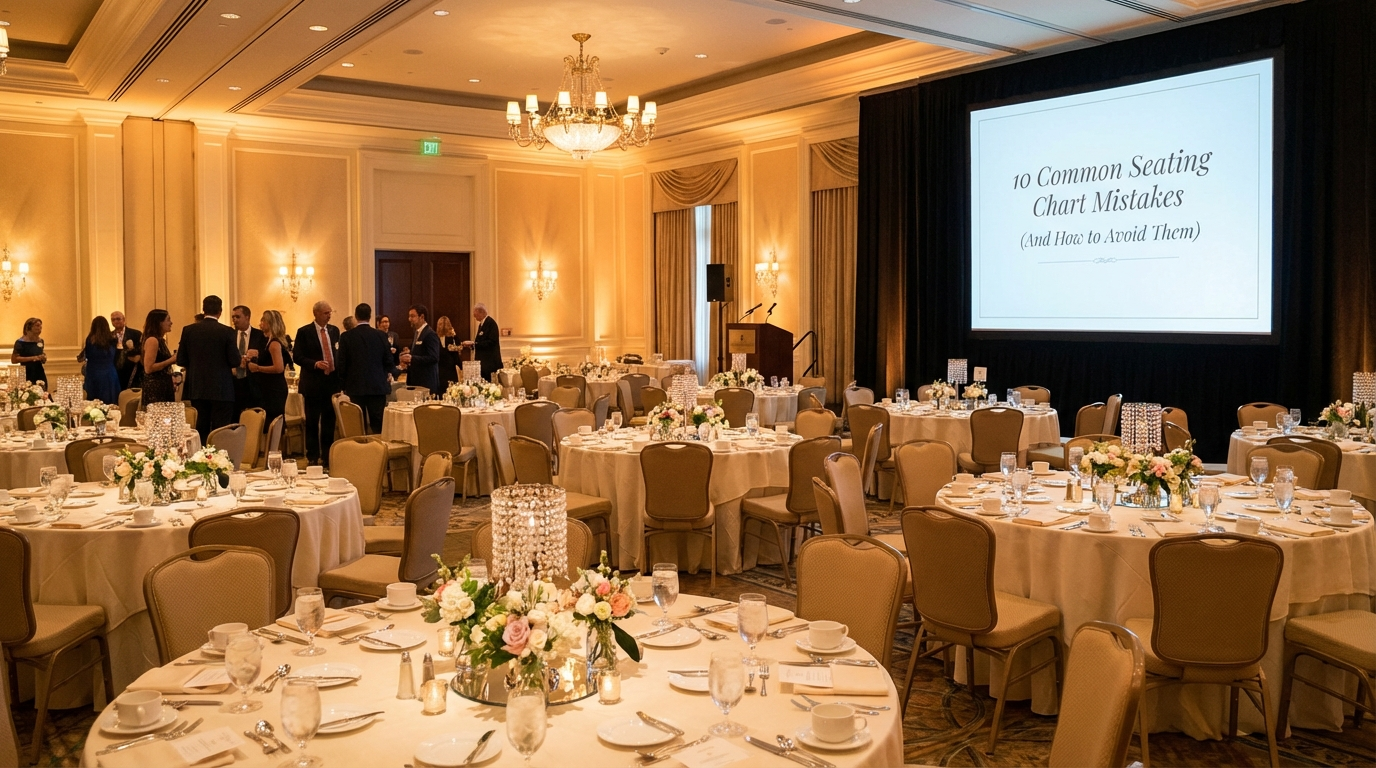
3. Overcrowding Tables
The mistake: Squeezing 12 people at a table meant for 10.
The fix: Follow venue capacity guidelines. Guests need elbow room to eat comfortably.
4. Forgetting Accessibility
The mistake: Placing wheelchair users at cramped tables or far from restrooms.
The fix: Identify accessibility needs early and choose appropriate locations.
5. Isolating Singles
The mistake: Scattering single guests randomly among couples.
The fix: Create at least one "singles table" or group singles together at mixed tables.
6. Not Having a Backup Plan
The mistake: No plan for no-shows or surprise guests.
The fix: Keep 1-2 flexible seats at several tables. Have an extra table ready if needed.
7. Forgetting the View
The mistake: Seating VIPs with obstructed views of the stage or couple.
The fix: Map sightlines from each table position before finalizing.
8. Ignoring Dietary Needs
The mistake: Seating guests with allergies/restrictions without informing catering.
The fix: Coordinate your chart with your caterer. Mark dietary needs clearly.
9. Making Last-Minute Changes on Paper
The mistake: Hand-editing printed charts, creating confusion.
The fix: Use digital tools that let you edit and reprint instantly.
10. Not Sharing the Final Chart
The mistake: Only you know the seating arrangement.
The fix: Share final charts with venue, caterers, coordinator, and display at the event.
Frequently Asked Questions
How far in advance should I start my seating chart?
Ideally, you should begin working on your seating chart 4-6 weeks before the event. This allows ample time for planning and adjustments.
What should I do if I have guests with dietary restrictions?
Communicate all dietary restrictions to your caterer and clearly mark them on your seating chart to ensure those guests are properly accommodated.
How can I handle last-minute changes to my seating chart?
Use digital seating chart tools that allow for easy editing and reprinting. Keep a few flexible seats open to accommodate unexpected guests or no-shows.
What is the best way to handle seating single guests?
Create a "singles table" or group single guests together at mixed tables to help them feel more comfortable and connected.
Who should I share the final seating chart with?
Share the final seating chart with the venue, caterers, event coordinator, and display it at the event for guests to easily find their seats.
How do I avoid seating guests who don't get along next to each other?
Do your homework and ask close friends and family about potential conflicts before finalizing your seating arrangements.
Get Event Planning Tips
Weekly tips on seating arrangements, event layouts, and planning strategies.
SeatingChart Team
Our team of event planning experts is dedicated to helping you create unforgettable events with perfect seating arrangements.
Ready to Create Your Seating Chart?
Start planning your perfect event layout with our free drag-and-drop seating chart creator. No sign-up required to try it out!
Try Free Seating Chart Creator